
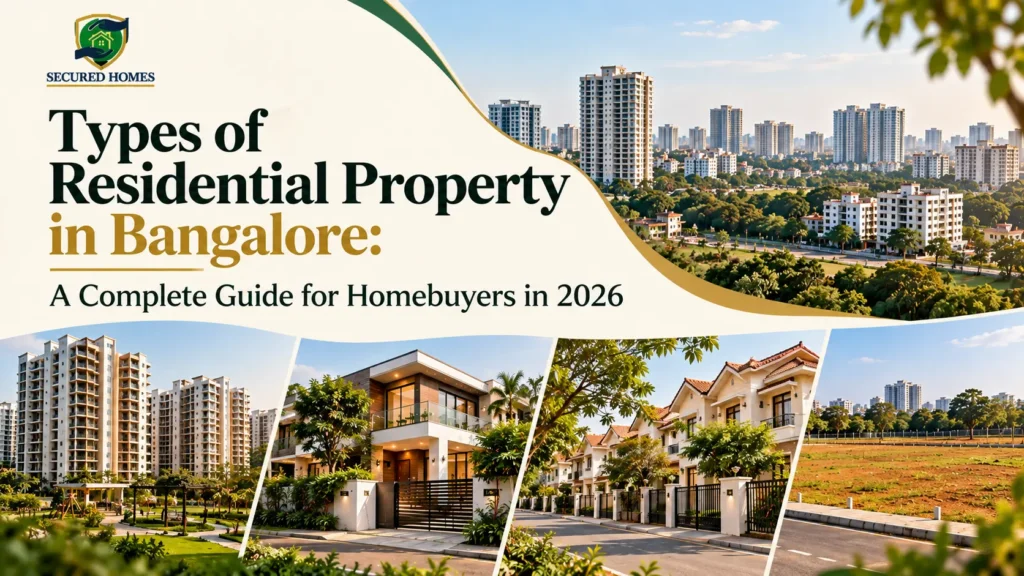
Buying a home in Bangalore is an exciting milestone, but choosing the right property can feel overwhelming. The city offers everything from compact apartments near IT hubs to spacious villas, independent houses, builder floors, and residential plots where you can build a home of your own.
But which type of residential property is right for you?
The answer depends on your budget, lifestyle, family size, preferred location, and long-term plans. If you want a low-maintenance home close to your workplace, an apartment may be a good choice. If privacy and outdoor space matter more, you might prefer a villa or independent house. And if you want to design your own home, a residential plot could be worth exploring.
In this guide, we will explore the different types of residential property in Bangalore, their benefits and limitations, suitable locations, and important things to check before making a purchase.
Looking for the Right Residential Property in Bangalore?
Finding the right property is easier when you have the right guidance. Whether you’re planning to buy a home, invest in a residential property, or manage a rental property in Bangalore, SecuredHomes can help you explore your options and make informed decisions.
>>Explore Our Property Management Services in Bangalore<<
What Are the Different Types of Residential Property in Bangalore?
The main types of residential property available in Bangalore include:
- Apartments and flats
- Villas and independent houses
- Builder floors
- Residential plots and sites
- Duplex and row houses
- Studio and serviced apartments
- Gated community homes
- Integrated township properties
- Co-living spaces and rental accommodation
Each option serves a different purpose. Understanding how these properties differ can help you shortlist the right home without wasting time or exceeding your budget.
1. Apartments and Flats
Apartments are among the most common residential property options in Bangalore. They are particularly popular with working professionals, small families, and first-time homebuyers who want convenient living with access to shared facilities.
An apartment is an individual residential unit within a larger building. Depending on the project, residents may have access to lifts, parking, security, a gym, a swimming pool, a clubhouse, and landscaped gardens.
Types of Apartments in Bangalore
- 1 BHK apartments: These usually include one bedroom, a hall, and a kitchen. They may suit single professionals, couples, or buyers looking for a compact home.
- 2 BHK apartments: With two bedrooms, these homes can work well for couples, small families, and people who need an extra room for a home office.
- 3 BHK apartments: These provide more space for families with children, people who work from home, or households that need an additional bedroom.
- 4 BHK and larger apartments: These properties generally target larger families and buyers looking for spacious layouts and premium amenities.
- Studio apartments: A studio typically combines the sleeping and living areas into one main room, with a separate bathroom and a kitchen area or kitchenette.
- Penthouses: These are generally located on the upper floors of buildings and may offer larger terraces, spacious layouts, and premium views.
Advantages of Buying an Apartment
- Shared security and maintenance arrangements.
- Access to amenities without managing them individually.
- A wide range of sizes and price points.
- Potential rental demand in areas near employment hubs and educational institutions.
- A community environment for families and individuals.
Disadvantages of Apartments
- Monthly maintenance charges can add to household expenses.
- Shared walls and common areas may limit privacy.
- Renovations can be subject to society rules.
- Construction quality, water supply, parking, and project management can vary.
Best Areas to Explore for Apartment Living
Whitefield and Sarjapur Road are worth exploring if you want to compare homes near employment hubs in East and Southeast Bangalore. Electronic City may appeal to people working in the southern technology corridor. Hebbal and Yelahanka offer options for buyers considering North Bangalore, while JP Nagar and Rajajinagar may suit those who prefer established residential neighbourhoods.
Always compare actual commute times, public transport access, schools, hospitals, and local infrastructure rather than choosing a property based on its locality name alone.
Best suited for: First-time homebuyers, working professionals, small families, and buyers who prefer shared amenities and relatively straightforward maintenance.
2. Villas and Independent Houses
If you value privacy, additional living space, and greater control over your home, a villa or independent house may be a better fit.
Although these terms are sometimes used interchangeably, they can describe different ownership and development arrangements.
An independent house generally stands on its own plot. A villa may be a standalone home or part of a planned residential community, often with shared security, roads, landscaping, and other amenities.
Types of Villas and Houses
- Independent villas: These homes offer private living space and may include a garden, terrace, parking area, or outdoor seating.
- Row houses: These homes are arranged in a row and commonly share side walls with neighbouring properties.
- Semi-detached houses: Two homes share a common wall while maintaining separate entrances and residential spaces.
- Duplex homes: These homes have two internal levels connected by a staircase. A duplex can be an apartment or a house, depending on the property design.
- Luxury villas: These properties may feature larger plots, premium interiors, landscaped outdoor areas, and access to exclusive community amenities.
Advantages of Villas and Independent Houses
- Greater privacy and separation from neighbours.
- More flexibility for interior changes, subject to applicable regulations.
- Potential for private gardens, terraces, and outdoor spaces.
- Greater control over how the property is maintained.
- A suitable option for families that need additional space.
Disadvantages to Consider
- Higher purchase prices in many sought-after locations.
- More responsibility for repairs, security, and upkeep.
- Potentially higher costs for landscaping, utilities, and property management.
- Longer commutes if the property is far from your workplace.
- Gated communities may charge additional maintenance fees.
Where Can You Look for Villas in Bangalore?
Sarjapur Road and Whitefield offer a variety of villa communities to compare. Buyers interested in North Bangalore can explore Yelahanka and areas around Devanahalli, while Kanakapura Road may appeal to people looking for homes in the southern growth corridor.
The right location depends on your daily routine, budget, and the level of infrastructure already available in the surrounding neighbourhood.
Best suited for: Larger families, buyers who value privacy, and people looking for a long-term home with more space.
3. Builder Floors
A builder floor is an independent residential unit on one floor of a low-rise building. Several such units may occupy the same plot, with each floor designed as a separate home.
Builder floors can offer a middle ground between apartment living and an independent house. They may provide more privacy than a large apartment complex without the cost of purchasing an entire house.
Why Do Buyers Consider Builder Floors?
- Fewer neighbouring households in some buildings.
- More independent living arrangements.
- Potentially lower amenity-related expenses than large residential communities.
- Suitable layouts for families who want separate floors or additional privacy.
However, the actual benefits depend on the building. Some builder floors have shared entrances, lifts, parking areas, or common maintenance responsibilities.
Before purchasing, check the sanctioned building plan, applicable approvals, structural condition, ownership documents, parking rights, water supply, and arrangements for maintaining common areas.
Best suited for: Families who want a relatively independent lifestyle without purchasing a full standalone property.
4. Residential Plots and Sites
A residential plot gives you the opportunity to build a home according to your own requirements. Instead of purchasing a completed house, you buy a parcel of land intended for residential use and construct a property when you are ready, subject to applicable approvals.
This option can appeal to buyers who want greater control over the design, layout, and construction timeline of their future home.
Types of Residential Plots
- Approved layout plots: These are plots within layouts approved by the relevant planning authority. Buyers should verify the actual approval and its scope.
- Gated community plots: These are located within planned developments that may include internal roads, security, drainage, and other shared facilities.
- Premium residential plots: These may be larger plots or parcels in established or higher-priced neighbourhoods.
- Investment-oriented plots: Some buyers purchase land with the intention of holding it for several years. However, appreciation is never guaranteed and depends on location, legal status, infrastructure, and market conditions.
Advantages of Buying a Plot
- Greater flexibility in designing and constructing your home.
- Potential to build in stages, depending on your finances and approvals.
- No need to maintain a completed building if you are purchasing vacant land.
- Possible long-term value growth in suitable locations.
Disadvantages of Buying a Plot
- You may need to arrange construction, contractors, approvals, and utilities yourself.
- Land can be harder to evaluate than a completed home.
- Legal or title issues can create serious risks.
- Vacant plots may require security and periodic maintenance.
- You generally cannot earn residential rent until a suitable property has been built or another lawful use is established.
What Should You Check Before Buying a Plot?
Verify the title chain, encumbrance certificate, applicable land-use and conversion records, layout approval, survey details, access roads, and relevant Khata or property records. Confirm that the approving authority is appropriate for that particular location.
Do not rely solely on a seller’s claim that a plot is approved. Obtain an independent legal review before paying a substantial advance.
Best suited for: Buyers who want to construct their own home, have a flexible timeline, and can manage the legal and practical responsibilities of land ownership.
5. Studio and Serviced Apartments
Studio and serviced apartments are useful options for people who prioritise convenience and may not need a large permanent home.
A studio is a compact residential unit with a combined living and sleeping area. A serviced apartment is generally furnished and may include housekeeping, internet, utilities, or other services depending on the operator and rental agreement.
Studio Apartments
Studio apartments may suit individuals who want a smaller living space near an office, university, or transport connection. Their compact size can make everyday cleaning and upkeep easier.
However, limited storage and the absence of a separate bedroom may make them less practical for families or people who need dedicated work and sleeping areas.
Serviced Apartments
Serviced apartments may be useful for business travellers, relocating professionals, and people who need temporary accommodation.Before booking one for a longer stay, compare the total monthly cost, deposit, included services, cancellation terms, and any additional charges.
Best suited for: Single professionals, students, business travellers, and people who need flexible accommodation.
6. Gated Community Homes
A gated community is a residential development with controlled access and shared facilities. It may contain apartments, villas, row houses, or a combination of different property types.
The key difference is the community setup rather than the physical structure of the home.
Depending on the project, residents may have access to security, landscaped areas, children’s play spaces, sports facilities, a clubhouse, and organised maintenance.
Benefits of Gated Communities
- Shared facilities and common-area management.
- A defined residential environment.
- Potentially convenient amenities for families.
- Opportunities for social interaction with neighbours.
Things to Consider
- Monthly maintenance and special assessments.
- The condition and long-term upkeep of shared facilities.
- Water availability, power backup, and parking arrangements.
- Rules governing pets, renovations, visitors, and shared spaces.
- The developer’s track record and the community’s management arrangements.
Remember that gated communities are not automatically safer or better maintained. Evaluate the actual project and its management before making a decision.
7. Integrated Townships
Integrated townships are large planned developments that combine residential properties with some supporting facilities, which may include retail areas, schools, parks, sports facilities, and commercial spaces.
They can offer a more self-contained living experience, especially for families who prefer access to everyday services within or near their residential community.
Townships may include multiple property types, such as apartments, villas, and residential plots.
What Are the Benefits?
- A planned residential environment.
- Potential access to everyday facilities nearby.
- Shared open spaces and recreational amenities.
- Multiple housing configurations within one development.
What Should You Check?
Find out which facilities are already operational and which are only proposed. Check actual travel times to your workplace, the availability of public transport, maintenance costs, and whether the promised amenities are included in the project approvals and agreements.
Best suited for: Families and buyers who prefer planned communities and access to shared facilities.
8. Co-Living Spaces and Shared Accommodation
Co-living spaces provide furnished rooms or private bedrooms with shared facilities such as kitchens, living areas, laundry rooms, and sometimes housekeeping.
They are different from conventional property ownership because residents usually pay for accommodation under a rental or membership arrangement rather than buying an individual residential unit.
Co-living can be practical for professionals who have recently moved to Bangalore, students, and people who do not want to manage furniture and household services themselves.
Before signing an agreement, check the deposit, notice period, visitor policies, utility charges, privacy arrangements, and refund conditions.
Best suited for: Students, new employees, short-term residents, and people who prefer flexible accommodation.
Apartment vs Villa vs Independent House vs Plot
Not sure which property type to choose? Use this comparison to narrow down your options.
| Factor | Apartment | Villa | Independent House | Residential Plot |
|---|---|---|---|---|
| Initial budget | Varies by size and location | Often higher | Varies significantly | Depends on land size and location |
| Privacy | Moderate | Generally high | Generally high | Depends on the home you build |
| Maintenance | Often shared | Owner and community responsibilities | Mainly owner-managed | Limited for vacant land, but upkeep is still needed |
| Customisation | Subject to building and association rules | Subject to approvals and community rules | Subject to applicable rules | Design flexibility within legal limits |
| Rental potential | Depends on location and demand | Depends on property and tenant demand | Depends on property and tenant demand | No conventional home rental until a property is available to rent |
| Construction responsibility | Usually handled by the developer for a new purchase | Usually completed by the developer in a ready home | Depends on whether it is ready or self-built | Buyer generally manages construction |
| Main advantage | Convenience | Space and privacy | Independent living | Control over future construction |
No single property type is best for everyone. Compare the total cost of ownership, rather than only the advertised purchase price.
Which Areas of Bangalore Should You Consider?
Bangalore’s residential market varies considerably from one locality to another. The following areas can help you begin your search, but they should not be treated as guaranteed investment hotspots.
1. East Bangalore: Whitefield and Surrounding Areas
Whitefield and nearby localities offer a range of apartments and some villa developments. They may be worth considering if you work in the eastern employment corridor.
Compare road congestion, public transport connections, water supply, and the distance between the property and your actual workplace.
2. Southeast Bangalore: Sarjapur Road
Sarjapur Road has a mix of apartments, gated communities, and villa projects. It may suit buyers who want to compare different property configurations in the southeast.
Check the specific approach road, commute during peak hours, nearby services, and the development status of the immediate neighbourhood.
3. South Bangalore: JP Nagar and Kanakapura Road
JP Nagar offers established residential surroundings, while Kanakapura Road has a variety of residential developments to explore. The best fit depends on whether you prefer an established neighbourhood or a newer development, as well as your budget and daily travel requirements.
4. North Bangalore: Hebbal, Yelahanka, and Devanahalli
North Bangalore offers a mix of apartments, houses, villas, and plotted developments. Some areas may appeal to people who need access to the airport or employment centres in the north.
Before buying, verify existing connectivity and services instead of relying entirely on future infrastructure proposals.
4. West Bangalore: Rajajinagar and Surrounding Neighbourhoods
West Bangalore includes established residential areas with a range of apartments and independent houses.
Buyers who value access to existing markets, public services, and established neighbourhoods can compare individual properties here against newer developments elsewhere.
How to Choose the Right Residential Property in Bangalore
Choosing a home becomes easier when you evaluate your needs in a clear order.
1. Set a Realistic Budget
Start with the amount you can comfortably spend, including your down payment and expected monthly loan repayment.
Do not forget additional costs such as stamp duty, registration fees, interiors, moving expenses, maintenance deposits, and repairs. For an under-construction property, applicable GST may also need to be considered.
Keep an emergency fund rather than committing every available rupee to the purchase.
2. Identify Your Main Purpose
Ask yourself why you are buying the property.
- For living: Prioritise commute, neighbourhood facilities, comfort, and future family needs.
- For rental income: Research local tenant demand, achievable rents, vacancy periods, and recurring costs.
- For long-term investment: Evaluate the purchase price, legal status, liquidity, holding period, and realistic resale prospects.
- For future construction: Focus on land suitability, approvals, access, utilities, and construction feasibility.
Your objective should guide the type of property you shortlist.
3. Compare the Total Cost, Not Just the Price
Two properties with similar asking prices can have very different ownership costs.
An apartment may involve recurring maintenance charges, while an independent house may need separate spending on security, repairs, and utilities. A plot can require additional expenditure for construction, approvals, and connecting essential services.
Calculate the likely cost over several years before deciding.
4. Check Legal Documents and Approvals
Legal verification is one of the most important steps when buying residential property in Bangalore.
Depending on the property type, ask a qualified property lawyer to review:
- The seller’s title and ownership documents.
- The encumbrance certificate and relevant transaction history.
- The applicable Khata and property tax records.
- The sanctioned building plan and relevant approvals.
- The project’s Karnataka RERA registration, where applicable.
- The Occupancy Certificate and Completion Certificate, where applicable.
- The sale agreement, sale deed, and any outstanding loans or legal claims.
The exact documents depend on the property and transaction. A single document should not be treated as proof that every legal requirement has been met. For a plot, pay particular attention to the title chain, land use, layout approval, conversion records where required, survey boundaries, and lawful access.
5. Inspect the Property and Surroundings
Visit the property in person whenever possible. Check construction quality, ventilation, natural light, drainage, water availability, parking, mobile connectivity, and the condition of common areas.
Visit the neighbourhood at different times of day to understand traffic, noise, and the practical commute. For an under-construction home, examine the approved plans, construction progress, agreement terms, and the developer’s delivery record.
6. Think About Your Future Needs
A home that suits you today may not meet your needs five years from now. Consider whether you may need an additional bedroom, a home office, easier access to healthcare, better public transport, or space for elderly family members.
Buying with a realistic long-term plan can help you avoid moving again sooner than expected.
Is Buying Residential Property in Bangalore a Good Investment?
Bangalore attracts homebuyers because of its employment opportunities, educational institutions, and diverse residential neighbourhoods. However, the suitability of a property as an investment depends on the individual asset and its purchase price.
Apartments may appeal to investors looking for rental demand in locations near employment hubs. Villas and independent houses can attract tenants seeking more space, but their purchase and maintenance costs may be higher. Residential plots offer the possibility of future construction and land appreciation, but they do not generate conventional residential rent while vacant.
Before investing, compare:
- Purchase price and transaction expenses.
- Expected rent based on comparable properties.
- Maintenance, repairs, taxes, and vacancy periods.
- Resale demand and the ease of finding a buyer.
- Legal risks and the credibility of the seller.
- The time period for which you can afford to hold the property.
Do not assume that a developing locality will automatically deliver high returns. Future infrastructure, property demand, and resale prices can change.
Common Mistakes to Avoid When Buying Property in Bangalore
Even a promising property can become an expensive mistake if important checks are overlooked.
- Choosing a home only because of its price: A cheaper property may come with longer commutes, limited services, or additional repair costs.
- Ignoring legal verification: Always verify ownership and relevant approvals before making a major financial commitment.
- Depending entirely on future infrastructure: Evaluate current access and services, and treat proposed developments as uncertain until they are operational.
- Underestimating additional costs: Include taxes, registration, interiors, maintenance, and potential repairs in your budget.
- Skipping a physical inspection: Marketing photographs cannot tell you everything about construction quality, water supply, noise, or neighbourhood conditions.
- Assuming rental income is guaranteed: Research actual local rents and account for vacancy periods and maintenance.
- Rushing the purchase: Compare several properties and review the agreement carefully before signing.
Frequently Asked Questions
1. What are the main types of residential property in Bangalore?
The main options include apartments, villas, independent houses, builder floors, residential plots, duplex homes, studio apartments, gated community homes, and township properties. Co-living spaces are another option for people seeking rental accommodation rather than ownership.
2. Which type of property is best for first-time homebuyers in Bangalore?
An apartment may suit first-time buyers who want shared amenities and relatively straightforward maintenance. A builder floor or independent house may be better for buyers who prioritise privacy. The right choice depends on affordability, location, and long-term requirements.
3. Is it better to buy an apartment or a villa in Bangalore?
An apartment may be more practical if you want shared facilities and lower maintenance responsibilities. A villa may suit you better if you need more space, privacy, and greater control over your home. Compare the full ownership cost before deciding.
4. Is buying a residential plot in Bangalore a good idea?
A residential plot can suit buyers who want to build a customised home or hold land for the long term. However, legal verification, land-use restrictions, approval status, access, and infrastructure need careful evaluation. Appreciation is not guaranteed.
5. Which areas of Bangalore are suitable for buying residential property?
Whitefield, Sarjapur Road, Electronic City, JP Nagar, Hebbal, Yelahanka, Kanakapura Road, and Rajajinagar are among the areas buyers can explore. The most suitable locality depends on your budget, workplace, family needs, and preferred property type.
6. What documents should I check before buying a property in Bangalore?
Depending on the property, important documents may include the title deed, encumbrance certificate, applicable Khata records, approved building plan, property tax receipts, and sale agreement. For relevant projects, check Karnataka RERA registration and applicable occupancy or completion certificates. Have a qualified property lawyer review the documents.
7. What is the difference between a villa and an independent house?
An independent house generally stands on its own plot, while a villa may be a standalone property or part of a planned community. Villas within gated developments may have shared amenities and community rules. Ownership rights should be confirmed from the actual sale documents.
8. Can I earn rental income from a residential property in Bangalore?
Yes, residential apartments, villas, independent houses, and some other completed properties may be rented out. Rental income depends on location, property condition, tenant demand, achievable rent, and ongoing expenses. A vacant plot generally does not generate conventional residential rental income.
Final Thoughts
Bangalore offers a wide range of residential properties, but the right choice is not necessarily the biggest home or the one in the most popular locality. It is the property that fits your finances, daily routine, family requirements, and long-term goals.
Apartments can offer convenience, villas and independent houses provide more privacy, builder floors offer a middle ground, and residential plots give you the opportunity to build a home according to your preferences. Each option comes with its own costs and responsibilities.
Take time to compare properties, inspect the neighbourhood, calculate the full ownership cost, and verify the legal documents before making a decision.
A well-informed purchase can help you find a home that works for your life today while giving you greater confidence about the years ahead.

