
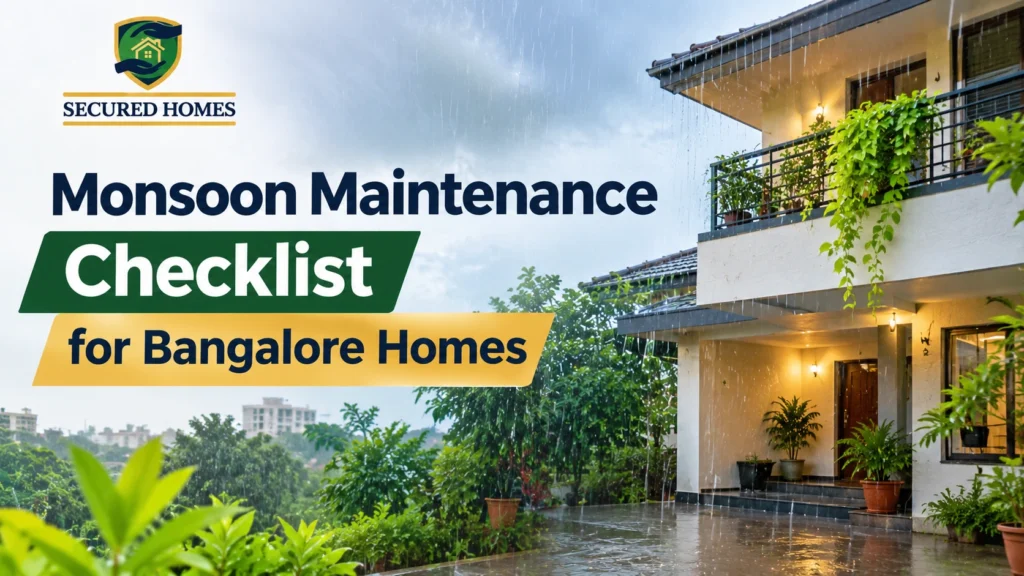
Monsoon brings relief from the summer heat in Bangalore, but it also brings several challenges for homeowners. Heavy rainfall, waterlogging, leaking roofs, damp walls and blocked drainage systems can cause problems if a house is not properly maintained.
Many homeowners notice these issues only after rainwater starts entering the house. By that time, moisture may have already damaged the walls, ceilings, wooden furniture and electrical fittings.
The good news is that most of these problems can be prevented with timely maintenance.
Whether you live in an independent house, apartment, villa or rented property, preparing your home before the rainy season can save you from unnecessary repairs and expenses.
This Monsoon Maintenance Checklist covers the important areas you should inspect, the problems you should look for and the steps you can take to keep your Bangalore home safe, clean and comfortable throughout the rainy season.
Keep Your Bangalore Home Safe with Secured Homes
Protect your property from monsoon damage with regular inspections and timely maintenance. SecuredHomes helps homeowners keep their properties safe and well-maintained, even when they live away from Bangalore.
Why Is Monsoon Home Maintenance Important in Bangalore?
Bangalore experiences seasonal rainfall, and some areas receive heavy showers that can put pressure on residential buildings and drainage systems.
Areas with poor drainage, older buildings, low-lying surroundings or damaged waterproofing may experience water seepage and waterlogging during heavy rainfall.
Even a small problem, such as a blocked balcony drain or a crack near a window, can become a bigger issue when rain continues for several days.
Here are some common reasons why monsoon maintenance is important:
- Prevents water leakage: Regular roof and wall inspections help identify weak spots before rainwater enters the house.
- Protects the building: Timely repairs reduce the risk of long-term moisture damage.
- Keeps electrical systems safe: Water near switches, wiring and electrical panels can create serious safety risks.
- Controls pests: Removing standing water helps reduce mosquito breeding.
- Protects furniture: Proper ventilation and moisture control help prevent damage to wooden furniture and cupboards.
- Reduces repair expenses: Fixing small problems early is usually easier than handling major damage later.
A little preparation before the rains can make a big difference to your home’s condition.
Complete Monsoon Maintenance Checklist for Bangalore Homes
Here is a practical checklist that homeowners can follow before and during the rainy season.
1. Inspect the Roof and Terrace for Water Leakage
The roof and terrace receive direct rainfall, making them some of the most important areas to check before monsoon.
Even a small crack can allow rainwater to enter the building. Over time, this can lead to ceiling damage, wall dampness and peeling paint.
What should you check?
- Look for visible cracks on the terrace floor.
- Check whether water collects in any area after rainfall.
- Inspect the joints between terrace floors and parapet walls.
- Check the waterproofing layer for damage or peeling.
- Remove leaves, dust and construction waste from the terrace.
- Check the areas around water tanks, solar panels and AC outdoor units.
- Make sure all rainwater outlets are working properly.
How can you prevent roof leakage?
If you notice cracks or damaged waterproofing, contact a professional waterproofing contractor. Depending on the condition of your terrace, they may recommend crack filling, joint treatment or a suitable waterproofing solution.
Do not simply cover a leaking area with paint. First identify where the water is entering and repair the actual source.
Helpful tip: Check the terrace during or immediately after rainfall, from a safe location, to identify areas where water is collecting.
2. Clean Rainwater Drains and Gutters
Blocked drainage is one of the common reasons for water accumulation around residential properties.
Leaves, mud, plastic waste and other debris can block rainwater outlets. When water cannot flow properly, it may collect on terraces, balconies, driveways and outside the house.
What should you check?
- Clean terrace rainwater outlets.
- Remove leaves and dirt from balcony drains.
- Check rainwater pipes for blockages.
- Clean outdoor drainage channels.
- Inspect manholes and drainage chambers.
- Make sure drain covers are properly fitted.
- Check that water flows away from the building.
Why is this important in Bangalore?
During heavy showers, blocked drains can cause water to collect around the property. Homes in low-lying areas or properties with poor drainage may face additional problems.
Practical solution: Arrange drain cleaning before the monsoon begins. If water continues to collect even after cleaning, ask a plumber to inspect the drainage slope and underground pipes.
3. Check External Walls for Cracks and Dampness
External walls are directly exposed to rain, wind and moisture. Small cracks around windows, corners and wall joints can allow water to enter the house.
This may cause damp patches, peeling paint and fungal growth inside rooms.
Look for these warning signs:
- Small or large cracks on external walls.
- Paint coming off or bubbling.
- Dark patches near windows.
- White powder-like marks on walls.
- Dampness around corners and ceiling joints.
- Water stains appearing inside rooms after rainfall.
How to protect external walls:
- Inspect all exterior walls carefully.
- Identify cracks and damaged plaster.
- Seal suitable cracks with the correct repair material.
- Check the condition of exterior paint.
- Apply suitable exterior waterproofing treatment if required.
- Check whether rainwater pipes are leaking onto the walls.
If dampness is already visible inside the house, do not immediately repaint the affected area. Find the source of moisture first.
This helps prevent the same problem from returning after every rainy season.
4. Check Windows and Doors for Rainwater Entry
Rainwater can enter through small gaps around window frames, door edges and poorly fitted glass panels.
This is especially troublesome during heavy rainfall accompanied by strong winds.
Follow these simple checks:
- Check the rubber seals around windows.
- Inspect the corners of window frames.
- Look for gaps between the wall and window frame.
- Check whether window glass is loose or damaged.
- Inspect balcony doors for water entry.
- Make sure sliding windows close properly.
- Check the condition of door frames and wooden doors.
What can you do?
Replace damaged rubber seals and use suitable weatherproof sealant around window frames where needed.
For wooden doors, check for swelling, moisture damage and difficulty closing. Keep them dry and arrange repairs if necessary.
Also, clean window tracks regularly because accumulated dirt can block small drainage openings.
5. Inspect Balconies and Outdoor Areas
Balconies are often overlooked during regular home maintenance. However, they can collect rainwater if their drainage outlets are blocked.
Standing water may damage flooring, enter nearby rooms or create conditions that attract mosquitoes.
Balcony maintenance checklist:
- Clean balcony drainage outlets.
- Remove dry leaves and dust.
- Check for cracks in balcony flooring.
- Inspect the waterproofing around balcony edges.
- Make sure water flows towards the drain.
- Remove unnecessary items that block water movement.
- Secure lightweight furniture and decorative items.
- Check the condition of balcony railings.
If water remains on the balcony even after the drain is cleaned, a professional should inspect the floor slope.
Avoid covering drainage outlets with mats, storage boxes or heavy planters.
6. Check Plumbing and Water Supply Systems
Rainy weather can make existing plumbing problems more difficult to manage. Small leaks around pipes, taps and water tanks may go unnoticed until they cause visible damage.
A plumbing inspection can help identify problems before they become expensive repairs.
What should you inspect?
- Check bathroom and kitchen taps for leakage.
- Inspect visible water supply pipes.
- Look for dampness around plumbing joints.
- Check overhead water tanks for cracks or leakage.
- Inspect the water tank inlet and outlet connections.
- Clean bathroom floor traps.
- Check toilet flush systems.
- Inspect outdoor taps and exposed pipes.
- Check whether rainwater is entering sewage or wastewater lines.
Important: Keep drinking water storage tanks properly covered. If rainwater or dirty runoff enters a tank, arrange cleaning and check the water quality before using it for drinking.
For apartment owners, the building maintenance team should also inspect shared plumbing lines and water storage systems.
7. Check Electrical Wiring and Outdoor Fittings
Electrical safety should never be ignored during the monsoon.
Water and electricity can create dangerous situations, especially when outdoor sockets, damaged wires or electrical panels are exposed to moisture.
Electrical safety checklist:
- Inspect exposed electrical wires.
- Check outdoor switches and sockets.
- Make sure electrical panels are protected from rainwater.
- Check for loose or damaged wiring.
- Inspect the condition of earthing.
- Ask an electrician to check the RCCB and MCB protection.
- Check outdoor lights and garden electrical fittings.
- Keep extension boards away from wet floors.
- Protect electrical appliances from possible water entry.
Why should you check RCCB and MCB?
An MCB helps protect a circuit against overload and short circuits. An RCCB helps protect against certain electrical leakage faults.
Both play important roles in electrical safety, but they do not replace proper wiring, earthing and professional inspection.
If you notice sparks, burning smells, repeated tripping or water near electrical fittings, keep away from the affected area and contact a qualified electrician. Never touch electrical equipment with wet hands or attempt repairs yourself.
8. Check Water Tanks, Sumps and Rainwater Harvesting Systems
Many Bangalore homes and apartment buildings depend on overhead tanks, underground sumps and rainwater harvesting systems.
These systems need attention before the rainy season because heavy rainfall can bring leaves, mud and other waste into collection areas.
What should you check?
- Inspect the overhead water tank cover.
- Check underground sump covers.
- Clean tank surroundings.
- Inspect water tank pipes and joints.
- Check overflow pipes.
- Clean rainwater harvesting filters.
- Remove leaves and debris from collection points.
- Inspect the first-flush system.
- Check whether sump pumps are working properly.
- Make sure excess water has a safe discharge route.
What is a first-flush system?
A first-flush system helps divert the initial rainwater from a collection surface before cleaner rainwater enters the storage or harvesting system.
It helps reduce the amount of dust and dirt entering the storage tank.
If your home has a rainwater harvesting system, arrange a proper inspection before the rains. A blocked filter or damaged overflow pipe can affect the system’s performance.
9. Prevent Mosquitoes and Other Pest Problems
Mosquitoes, ants, termites and cockroaches can become more noticeable during the rainy season.
Moist areas, uncovered water containers and blocked drains can create suitable conditions for pests.
Follow these pest prevention steps:
- Remove standing water from plant trays.
- Keep buckets and water containers covered.
- Clean outdoor drains regularly.
- Remove waste from corners and unused spaces.
- Keep kitchen areas clean and dry.
- Check wooden furniture for termite activity.
- Inspect storage rooms and cupboards.
- Seal small gaps around doors and windows.
- Arrange professional pest control if you notice repeated infestations.
Special attention for wooden furniture:
Moisture can damage wooden cupboards, wardrobes and doors. Keep furniture slightly away from damp walls and avoid placing it directly against areas with visible seepage.
If you notice mud tubes, hollow-sounding wood or discarded wings near wooden structures, arrange a termite inspection.
10. Protect Wooden Furniture, Flooring and Important Documents
Continuous moisture can damage household belongings even when rainwater does not directly enter the house.
Wooden furniture may swell, cupboards may develop a musty smell and stored documents may become damp.
What can you do?
- Keep important documents in waterproof folders.
- Store valuables on higher shelves.
- Avoid placing cardboard boxes directly on the floor.
- Keep wooden furniture away from damp walls.
- Clean and dry wet floors quickly.
- Use moisture absorbers in cupboards where needed.
- Keep wardrobes ventilated.
- Check mattresses and sofa corners for dampness.
- Move expensive electronics away from areas with previous leakage.
If your home has experienced water leakage before, pay extra attention to the same areas during the first few heavy showers.
11. Inspect the Garden, Compound Wall and Outdoor Drainage
If you have an independent house or villa in Bangalore, outdoor maintenance is equally important.
Rainwater can collect near compound walls, garden spaces and entrances when drainage paths are blocked.
Outdoor maintenance checklist:
- Trim overhanging tree branches.
- Remove dead leaves from the garden.
- Clean outdoor drainage channels.
- Check the compound wall for visible cracks.
- Inspect the main entrance for water entry.
- Remove waste from rainwater collection points.
- Secure outdoor furniture and loose objects.
- Check the condition of garden pathways.
- Look for water collecting near the building foundation.
If the ground around your home slopes towards the building, consult a professional about improving water drainage.
Also, arrange tree trimming safely. Avoid cutting branches near electrical lines yourself.
12. Check Basement, Parking and Low-Lying Areas
Some residential buildings have basements, underground parking spaces or lower-ground storage areas.
These spaces need special attention during heavy rainfall because water can enter through ramps, damaged walls, drainage openings or underground pipes.
What should you check?
- Inspect basement walls for damp patches.
- Check parking area drainage channels.
- Clean water collection pits.
- Test sump pumps.
- Inspect pump power connections through a qualified technician.
- Check basement ventilation.
- Make sure emergency exits are accessible.
- Inspect ramps for proper water drainage.
- Check whether water can flow back through drainage outlets.
If your property has a basement sump pump, test it before the rainy season. Keep the pump maintained and have a backup plan for power interruptions.
Never enter a flooded basement if electrical equipment may be live.
13. Service ACs, Inverters and Essential Appliances
Power interruptions and increased moisture can affect household appliances during monsoon.
A basic service check can help reduce unexpected problems.
Appliance maintenance checklist:
- Clean AC filters.
- Check AC drainage pipes.
- Inspect outdoor AC units.
- Check inverter and battery condition.
- Keep electrical appliances away from damp areas.
- Inspect refrigerator power connections.
- Check washing machine drainage.
- Keep backup lights and torches ready.
If your AC produces a bad smell or water starts dripping indoors, arrange servicing instead of ignoring the issue.
Similarly, avoid operating appliances with damaged cables or plugs.
14. Prepare an Emergency Home Maintenance Kit
Even after proper preparation, unexpected problems can occur during heavy rainfall.
Keeping a few essential items ready can help you manage minor situations until professional help arrives.
Keep these items at home:
- Torch and extra batteries
- First-aid kit
- Power bank
- Waterproof document folder
- Drinking water
- Basic cleaning supplies
- Mop and bucket
- Emergency contact numbers
- Basic tool kit
- Spare dry towels
- Waterproof covers for important belongings
Also, save the contact details of a reliable plumber, electrician and waterproofing professional.
If water enters your property, focus on personal safety first. Do not enter flooded areas to rescue electrical appliances or other belongings.
Monsoon Maintenance Schedule for Bangalore Homes
Following a maintenance schedule makes it easier to manage different tasks without waiting for problems to appear.
Here is a simple schedule homeowners can follow.
| Time | Maintenance work |
|---|---|
| Before monsoon | Inspect roof, terrace, external walls and waterproofing |
| Before monsoon | Clean drains, rainwater pipes and gutters |
| Before monsoon | Check electrical wiring and plumbing |
| Before monsoon | Inspect water tanks, sumps and pumps |
| During monsoon | Check for leakage and dampness after heavy rain |
| During monsoon | Remove leaves and debris from outdoor drains |
| During monsoon | Check for standing water and pest activity |
| After monsoon | Inspect walls, ceilings and flooring for damage |
| After monsoon | Repair damaged paint, plaster and waterproofing |
| After monsoon | Clean drainage systems and check water storage areas |
One useful suggestion: Do not wait until the first heavy rainfall to start maintenance. Complete major repairs and waterproofing work while surfaces are dry and suitable for the selected treatment.
Special Monsoon Maintenance Tips for Apartment Owners in Bangalore
Living in an apartment is different from living in an independent house. Some maintenance responsibilities are handled by individual homeowners, while others are managed by the apartment association or facility management team.
To avoid confusion, divide the responsibilities properly.
| Area | Who should check it? |
|---|---|
| Balcony drainage | Individual homeowner |
| Windows and doors | Individual homeowner |
| Internal plumbing | Individual homeowner |
| Terrace waterproofing | Apartment management |
| Common drainage systems | Apartment management |
| Underground sump | Apartment management |
| Lift room and electrical panels | Facility management |
| Basement parking | Apartment management |
| Common garden and walkways | Facility management |
| Rainwater harvesting system | Apartment management |
What should apartment associations do before monsoon?
- Arrange professional inspection of the terrace.
- Clean common drainage systems.
- Check basement water pumps.
- Inspect common electrical panels.
- Check rainwater harvesting systems.
- Clean underground water storage areas.
- Inspect compound walls and common pathways.
- Share emergency contact details with residents.
Regular communication between residents and the management team can prevent small maintenance problems from becoming building-wide issues.
What Should You Do If Your House Develops Leakage During Monsoon?
Sometimes, homeowners discover leakage only after heavy rainfall begins. In such situations, taking the correct steps is important.
Follow these steps:
Step 1: Identify the affected area
Check whether the leakage is coming from the ceiling, external wall, window, bathroom or plumbing line.
Step 2: Protect household belongings
Move furniture, electronics and important documents away from the affected area.
Step 3: Take photographs
Photograph the leakage, damp patches and damaged areas. These pictures can help a professional understand the problem.
Step 4: Check electrical safety
If water is near switches, sockets or electrical wiring, stay away and contact a qualified electrician. Do not touch wet electrical fittings.
Step 5: Contact the right professional
Depending on the issue, you may need a plumber, waterproofing contractor or building maintenance professional.
Step 6: Repair the actual source
Do not simply repaint the damaged wall or cover the ceiling stain. Find the reason behind the leakage and arrange the correct repair.
Common Monsoon Home Maintenance Mistakes to Avoid
Many homeowners take precautions only after noticing damage. However, avoiding a few common mistakes can make property maintenance easier.
Here are some mistakes you should avoid:
- Ignoring small cracks: Small cracks can allow water to enter and damage walls over time.
- Cleaning drains only after waterlogging: Drainage systems should be cleaned before heavy rainfall.
- Painting damp walls: Painting without fixing the moisture source will not solve the problem.
- Ignoring balcony drainage: Even a small blockage can cause water accumulation.
- Leaving water containers uncovered: Open containers can collect rainwater and attract mosquitoes.
- Ignoring electrical problems: Damaged wires and wet electrical fittings can create serious hazards.
- Not checking the water tank: An uncovered or damaged tank may allow dirt and contaminated water to enter.
- Delaying waterproofing repairs: Waiting until the terrace starts leaking can increase repair work.
- Ignoring basement drainage: Blocked basement drains can lead to water accumulation.
- Not checking the property after rainfall: New leakage and damp patches may go unnoticed.
The best approach is to inspect your property regularly and take action as soon as you notice something unusual.
How Can Professional Property Maintenance Services Help During Monsoon?
Managing every maintenance task can become difficult, especially if you have a large house, multiple properties or a busy work schedule.
Professional property maintenance services can help homeowners inspect and manage important areas of their properties.
Depending on the service provider, maintenance support may include:
- Roof and terrace inspections.
- Waterproofing and leakage checks.
- Plumbing inspections.
- Electrical safety checks.
- Drainage cleaning.
- Water tank maintenance.
- Pest control.
- Garden and outdoor maintenance.
- Regular property inspections.
- Identification of repair requirements.
For homeowners who live away from Bangalore, professional property management can also help ensure that their property receives regular attention.
This is particularly useful for vacant houses and properties that remain locked for long periods.
Before hiring a service provider, understand what is included in the maintenance package, how often inspections are conducted and whether repair costs are charged separately.
Complete Monsoon Maintenance Checklist: Quick Reference
Here is a simple checklist you can save and use while inspecting your home.
Your home inspection progress
0/18 completedInspect terrace and roof for cracksCheck waterproofing conditionClean terrace drains and rainwater outletsInspect external walls for dampnessSeal gaps around windows and doorsClean balcony drainage outletsCheck bathroom and kitchen plumbingInspect overhead water tanks and underground sumpsClean rainwater harvesting filtersGet electrical wiring inspectedCheck RCCB, MCB and earthingRemove standing water around the propertyInspect wooden furniture and cupboardsCheck garden and compound drainageInspect basement and parking areasService AC and inverterPrepare emergency contacts and suppliesInspect the house again after heavy rainfall
Frequently Asked Questions About Monsoon Home Maintenance in Bangalore
1. How do I prepare my home for monsoon in Bangalore?
Start by inspecting your terrace, roof, external walls, windows and drainage system. Clean rainwater outlets, check plumbing and electrical fittings, inspect water tanks and remove standing water around the property.
Complete major repairs before heavy rainfall begins.
2. What are the most common home problems during monsoon in Bangalore?
Some common problems include:
- Roof leakage.
- Wall dampness and seepage.
- Blocked drainage systems.
- Waterlogging near entrances.
- Electrical problems.
- Mosquito and pest infestations.
- Damage to wooden furniture.
- Basement water accumulation.
Regular inspections can help reduce these problems.
3. How can I prevent roof leakage during the rainy season?
Inspect the terrace for cracks, damaged waterproofing and blocked drainage outlets. Repair damaged areas using suitable waterproofing methods.
If leakage has already started, identify the actual source of water entry and contact a professional.
4. How can I prevent damp walls during monsoon?
Check external walls, plumbing connections, windows and terrace joints for water entry. Repair cracks and leakage sources before treating the affected wall.
Keep rooms ventilated and dry wherever possible. Avoid painting over damp patches without addressing the cause.
5. How often should I clean home drainage systems?
Clean terrace, balcony and outdoor drainage outlets before the monsoon. During the rainy season, inspect them regularly, particularly after heavy rainfall or when you notice slow water flow.
Underground drainage chambers may require professional cleaning depending on their condition.
6. Is terrace waterproofing necessary for Bangalore homes?
Terrace waterproofing is important because the roof receives direct rainfall. Proper waterproofing helps reduce the chances of water entering the building.
However, the need for treatment depends on the terrace’s condition, existing waterproofing and any signs of leakage.
7. How can I protect an empty house during monsoon?
If your house remains vacant, arrange regular property inspections. Ask someone to check the roof, windows, drainage outlets, water tanks and electrical systems.
Keep the house ventilated when possible, remove standing water and arrange immediate repairs if leakage or dampness appears.
8. What should apartment owners check before monsoon?
Apartment owners should inspect their balconies, windows, internal plumbing and electrical fittings.
They should also coordinate with the apartment association to check common terraces, basement drainage, water pumps, rainwater harvesting systems and common electrical areas.
9. When is the best time to complete monsoon home maintenance?
The best time is before the rainy season begins. Major waterproofing, roof repairs, exterior crack repairs and drainage cleaning should be completed while weather conditions are suitable.
However, inspections should continue during and after the rainy season.
10. Can regular property maintenance reduce monsoon repair costs?
Yes. Regular maintenance helps identify small issues before they become major problems. Fixing a blocked drain, damaged seal or minor leak early can help prevent more extensive damage to the property.
Conclusion
Monsoon preparation is not just about cleaning your house. It is about protecting your property from water damage, electrical problems, dampness and other seasonal issues.
Following this Monsoon Maintenance Checklist can help Bangalore homeowners keep their houses in better condition throughout the rainy season.
Start with the most important areas, such as the terrace, drainage system, external walls, plumbing and electrical fittings. Do not ignore small signs of leakage or dampness, as they can become bigger problems if left untreated. Whether you own an apartment, independent house, villa or vacant property, regular inspections and timely repairs can help protect your investment.
Remember, a well-maintained home is easier to manage during monsoon and requires fewer unexpected repairs.
If you cannot manage every maintenance task yourself, consider professional property maintenance services to keep your home safe, clean and well-maintained throughout the year.
SEO Recommendations Before Publishing
Suggested internal linking opportunities:
| Anchor text | Suggested page/topic |
|---|---|
| Property Management Services in Bangalore | Main property management service page |
| Home Maintenance Services in Bangalore | Home maintenance service page |
| House Inspection Services | Property inspection page |
| Empty House Maintenance | Vacant property maintenance blog |
| Protect Your Property When You Are Away | Related property security blog |
Use only relevant pages that are already published on your website.
Content gaps addressed in this article:
- Bangalore-specific maintenance considerations.
- Separate advice for apartments, villas and independent houses.
- Water tanks, underground sumps and rainwater harvesting.
- Basement and parking maintenance.
- Practical leakage troubleshooting steps.
- Electrical safety and emergency precautions.
- Vacant property maintenance.
- Apartment association responsibilities.
- Before, during and after monsoon maintenance schedule.
- Interactive inspection checklist.
These additions make the article more useful than a basic list of roof, window and drain maintenance tips. The structure also covers common homeowner questions and practical next steps.
Sources
- VDM Constructions – Monsoon Preparedness for Bangalore Homes
Bangalore-specific terrace, drainage, sump and electrical checks. - Housing.com – How to Prepare Your Home for the Monsoon
Roof, exterior, windows, electrical safety and pest prevention. - Ministry of Housing and Urban Affairs – Maintenance Guidelines
Government maintenance recommendations for roofs, drains, seepage, tanks and electrical systems. - LocalSaathi – Monsoon Home Maintenance Checklist
Practical repair priorities and warning signs.